
Aim
The potential and challenges of Unmanned Aerial Vehicles for monitoring our environment is covered using theoretical as well as practical approaches.
Content
In recent years, the use of small Unmanned Aerial Vehicles (UAV, UASs or also called Drones) inceased to map and monitor our environment at unprecedented detail. The development of new multispectral instruments on UAVs have given the remote sensing community exciting opportunities to acquire new data. With these new opportunities also new challenges such as sensor calibration, georeferencing as well as processing workflows, calibration/validation, and derivation of relevant land cover information. The course will cover theory and practice to apply UAVs in environmental research and its use for remote sensing analysis.
Coding
Software
Techniques
Content
General Course News and Updates
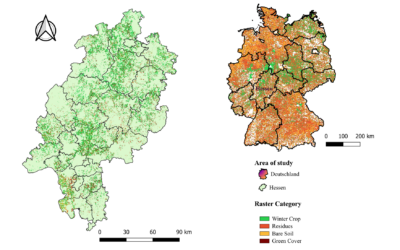
EAGLE Internship Presentation “Validation of High-Resolution Crop Classification Maps in Hessen Using IACS Parcel Data”
On March 24, 2026, Guisseppe Vasquez will present his internship results on " Validation of High-Resolution Crop Classification Maps in Hessen Using IACS Parcel Data " at 12:30 in seminar room 3, John-Skilton-Str. 4a.type of presentation: From the abstract: My...
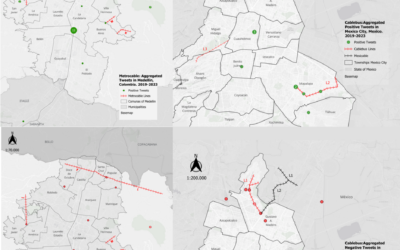
EAGLE Innolab Presentation: People’s Perception of Cable Car Transportation Using Twitter Data
On March 24 2026, Angie Torres will present her Innolab results on " People's Perception of Cable Car Transportation Using Twitter Data" at 12:00 in seminar room 3, John-Skilton-Str. 4a. From the abstract: Urban mobility is commonly analysed through geospatial methods...
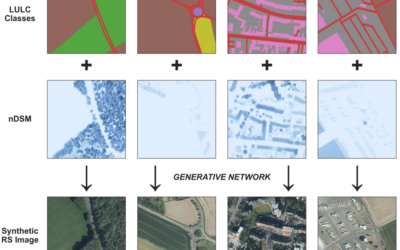
EAGLE MSc Defense: Synthetic High-Resolution Remote Sensing Image Generation – A Comparative Study of Model Training, Surface Data Variability and Evaluation Metrics
On March 26, 2026, Georg Starz will present his Master Thesis on " Synthetic High-Resolution Remote Sensing Image Generation – A Comparative Study of Model Training, Surface Data Variability and Evaluation Metrics" at 10:00 in seminar room 3, John-Skilton-Str. 4a....
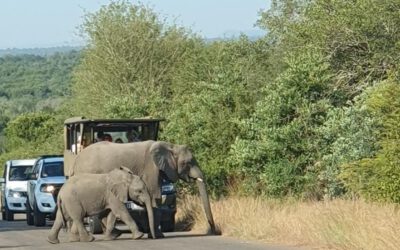
EAGLE Student Supports Savanna Monitoring in Kruger National Park
Our EAGLE M.Sc. student Lukas Fronzeck joined Luisa Pflumm, a former EAGLE and now PhD researcher at our Earth Observation Research Cluster (EORC), during fieldwork in Kruger National Park in South Africa. The field campaign forms part of Luisa’s PhD project...
![FW: [EORC Talk] Pathways towards a Healthy City – 10 March 2026, 03 pm](https://eagle-science.org/wp-content/uploads/2026/03/image001.jpg)
FW: [EORC Talk] Pathways towards a Healthy City – 10 March 2026, 03 pm
Dear colleagues and EAGLE students, This is a quick reminder to attend today’s and tomorrow’s EORC Talks, both at 3 p.m. sharp. TODAY 📍 What: EORC Talk on “Pathways towards a Healthy City” (Blog) 📍 Who: Christian Werthmann and Christian Corral...
EAGLE Students Calibrate Thermal Sensors for Fire Mapping in Kruger National Park
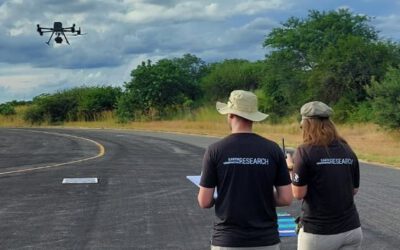
Fieldwork, international collaboration, and hands-on sensor calibration – three EAGLE M.Sc. students recently experienced all of this during their internship in Kruger National Park in South Africa. Clemens, Sebastian, and Lukas are currently supporting an ongoing...
EAGLE Innolab Presentation: “From UAV to Satellite: Fractional Snow Cover Estimation at Sentinel-2 Resolution”
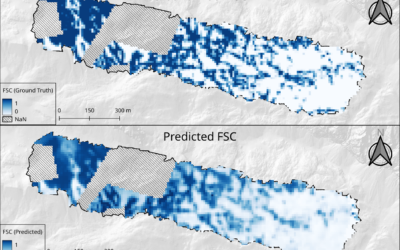
On March 03, 2026, Lutz Kleemann will present his Innolab results on "From UAV to Satellite: Fractional Snow Cover Estimation at Sentinel-2 Resolution" at 12:00 in seminar room 3, John-Skilton-Str. 4a. From the abstract: Fractional Snow Cover (FSC) estimation is an...
EAGLE Internship Presentation “Stream flow assessment and Irrigation demand in Central Asia (Aral Sea)”
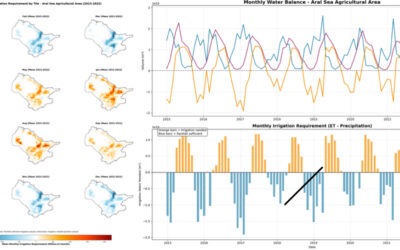
On February 05, 2026, Anugraha Das will present her internship results on " Stream flow assessment and Irrigation demand in Central Asia (Aral Sea )" at 12:00 in seminar room 3, John-Skilton-Str. 4a. From the abstract: This presentation assesses streamflow dynamics...
EAGLE Internship Presentation “Recommended Practices for Urban Flood Mapping in Emergency Response”
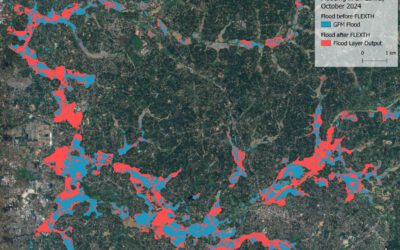
On February 10, 2026, Laura Obrecht will present her internship results on " Recommended Practices for Urban Flood Mapping in Emergency Response" at 12:00 in seminar room 3, John-Skilton-Str. 4a.type of presentation: From the abstract: Flood detection in urban...
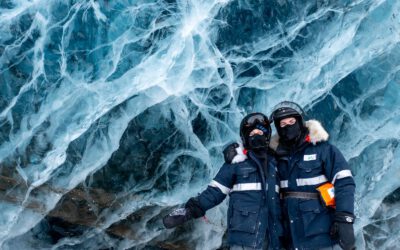
EAGLE Internship Presentation ” Internship on Svalbard”
On February 24, 2026, Leonie Sonntag and Jannis Midasch will present their internship results on " Internship on Svalbard" at 13:00 in seminar room 3, John-Skilton-Str. 4a. From the abstract: During March and April 2025, the two EAGLE students Leonie Sonntag and...