
Aim
The potential and challenges of Unmanned Aerial Vehicles for monitoring our environment is covered using theoretical as well as practical approaches.
Content
In recent years, the use of small Unmanned Aerial Vehicles (UAV, UASs or also called Drones) inceased to map and monitor our environment at unprecedented detail. The development of new multispectral instruments on UAVs have given the remote sensing community exciting opportunities to acquire new data. With these new opportunities also new challenges such as sensor calibration, georeferencing as well as processing workflows, calibration/validation, and derivation of relevant land cover information. The course will cover theory and practice to apply UAVs in environmental research and its use for remote sensing analysis.
Coding
Software
Techniques
Content
General Course News and Updates

A First Get-Together with the New EAGLE Generation 🦅
A new EAGLE generation means new faces, new ideas, and the start of another journey in Earth Observation. And what better way to kick things off than with a relaxed evening at the pub? Our first social event brought together the new students, older EAGLE generations,...
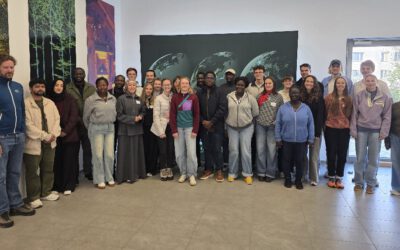
Welcome, new EAGLEs!
The newest group of EAGLE students arrived in Würzburg! They come from different countries, with different backgrounds and different skills, and that’s exactly what makes this program special. Remote sensing is a big field, and it gets better when people look at it...
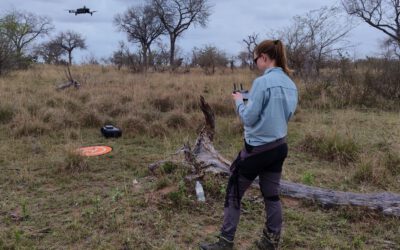
EAGLE student Jolien Grafe spent her internship in Kruger National Park
Jolien spent her internship in Kruger National Park in South Africa, working together with SANParks. She was part of an ongoing DFG project here at EORC that looks at how fire and drought shape savanna ecosystems. The project is led by Mirjana Bevanda and Tobias...
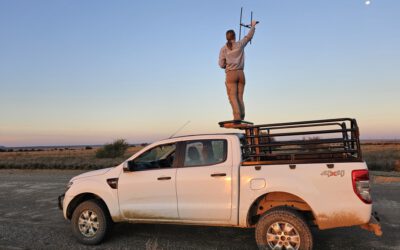
Night shifts with the black-footed cat: Jolien Grafe’s internship in Benfontein
Most remote sensing work happens in the daylight, at a desk or in a field with a drone. Jolien Grafe, one of our EAGLE M.Sc. students, spent a good part of her internship doing the opposite: sitting on a hill at dusk, listening for a beeping signal from a very small,...
![[Spotlight] Lecturer Spotlight: Julian Faeth](https://eagle-science.org/wp-content/uploads/2026/10/Julian_Faeth_EORC_EAGLE_2026-400x250.jpg)
[Spotlight] Lecturer Spotlight: Julian Faeth
Dr. Julian Fäth is a postdoctoral researcher at our EORC. His teaching combines remote sensing, forest ecology and geospatial data science with a strong focus on operational applications and climate adaptation. Since 2018, Julian has been actively involved in...
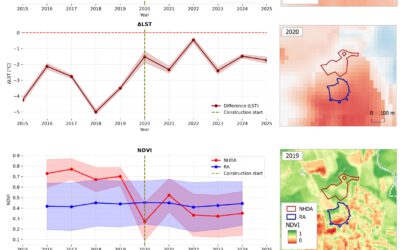
EAGLE MSc Defense: New Housing Development Areas: Assessing Structural Types and Environmental Effect
On September 22, 2026, Agnes Zwick will present her Master Thesis on " New Housing Development Areas: Assessing Structural Types and Environmental Effect" at 10:00 at the seminar room 3 in John-Skilton-Str. 4a. From the abstract: Germany faces a persistent tension...
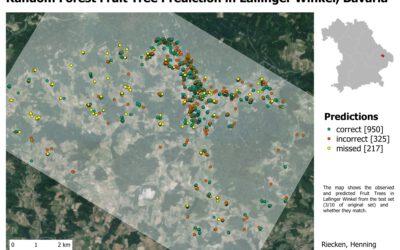
EAGLE Internship Presentation: Internship at the German Remote Sensing Data Center (DFD) of the German Aerospace Center (DLR)
On September 22, 2026, Henning Riecken will present his internship results on " Internship at the German Remote Sensing Data Center (DFD) of the German Aerospace Center (DLR)" at 12:00 at the seminar room 3 in John-Skilton-Str. 4a. From the abstract: Through the...
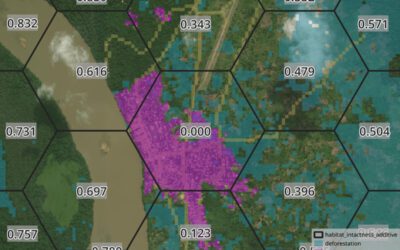
EAGLE Internship Presentation: Verifiable Nature Units
On August 25, 2026, Lutz Kleemann will present his internship results on " Verifiable Nature Units" at 12:00 at the seminar room 3 in John-Skilton-Str. 4a. From the abstract: Biodiversity credits and conservation work increasingly depend on measurable outcomes. During...
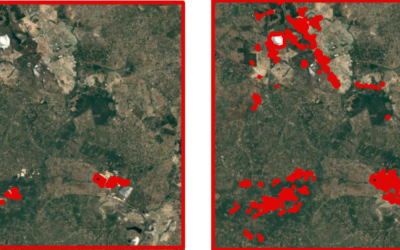
EAGLE Innolab Presentation: Post-processing and Quality Assessment of Mapathon-Derived Mining Data for Cobalt Belt Mapping
On August 11, 2026, Espérance Kandjale will present her Innolab results on " Post-processing and Quality Assessment of Mapathon-Derived Mining Data for Cobalt Belt Mapping " at 12:00 in seminar room 3, John-Skilton-Str. 4a. From the abstract: During my internship, I...
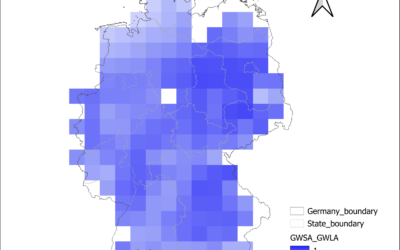
EAGLE Internship Presentation: Groundwater Level Trends in Germany: A National-Scale Assessment Using In-Situ Monitoring Data and GRACE Satellite Products
On August 04, 2026 Anugraha Das will present her internship results on " Groundwater Level Trends in Germany: A National-Scale Assessment Using In-Situ Monitoring Data and GRACE Satellite Products" at 12:00 at the seminar room 3 in John-Skilton-Str. 4a. From the...