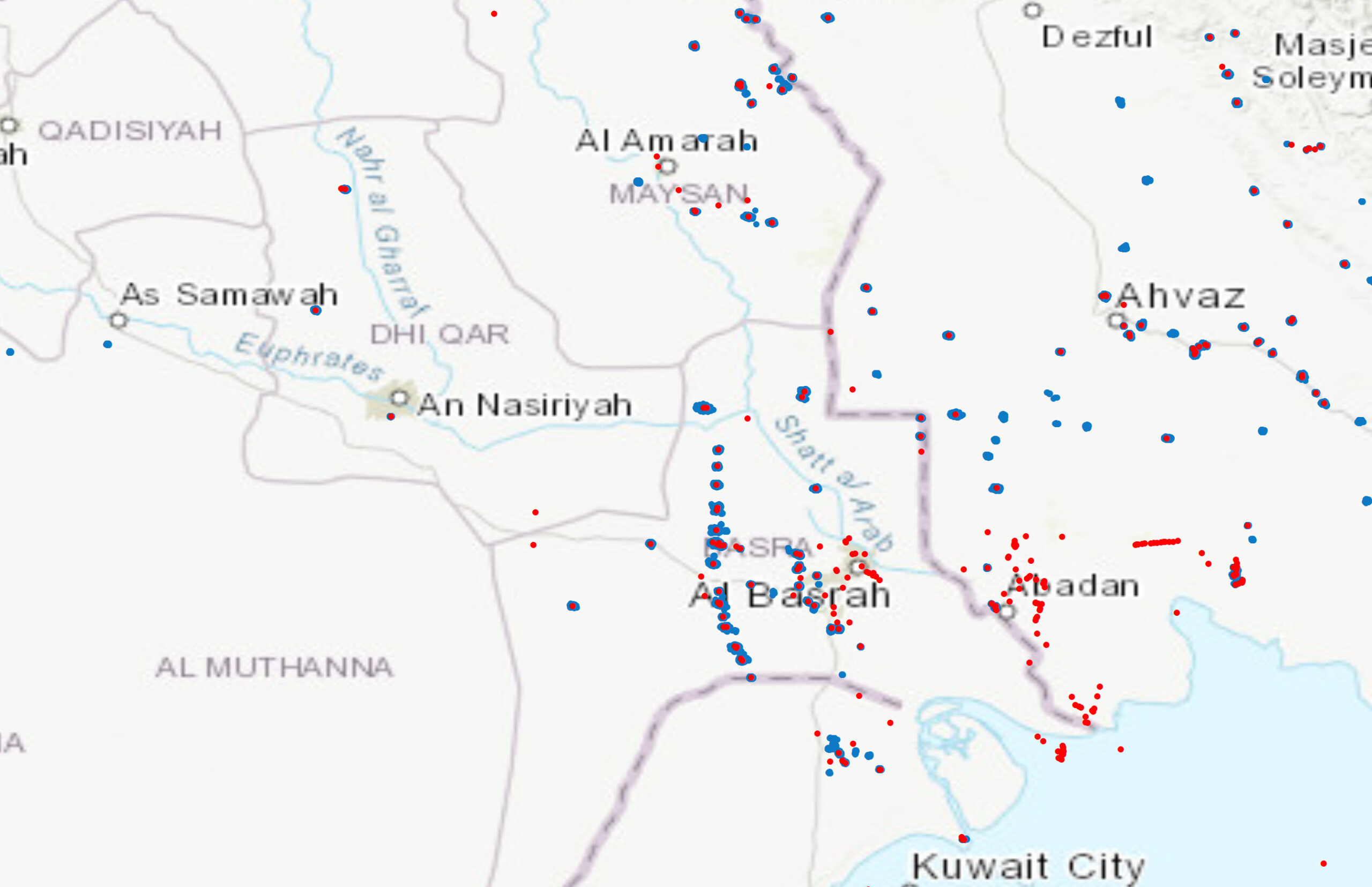
Felix Glasman will defend his M.Sc. thesis “The FireBIRD Mission: Potential for the Detection of Gasflaring” on Thursday 30th of July at 11am. From his abstract: “The controversial but widespread process of gas flaring has received growing attention over the recent years because of its far-reaching and serious consequences for both, humans and the natural environment. Initiatives such as the Global Gas Flaring Reduction Partnership (GGFR program) have been initiated with the objective, to abolish the process of gas flaring which, however, first requires an exact identification of the phenomenon. Since reliable information on gas flaring activity is scarce, there is a growing interest in remote sensing based approaches to study gas flaring activity. This thesis investigates on the potential of the FireBIRD mission to detect gas flaring activity. An unprecedented approach has been developed, to identify gas flaring sites using the Maxent-model with different predictor variables and training data for two different study areas (North Dakota, USA and Basra, Iraq). Based on the FireBIRD mission and other sensor systems, six different predictor variables were calculated; the Maximum Fire Probability Product of FireBIRD, the NDVIinv, the NHISWIR and NHISWNIR as well as the independently developed NDBRI and BUAI. Subsequently, the detection rate for each study area was calculated using validation data based on high-resolution optical satellite imagery and compared to the already established VIIRS product. The developed approach yielded a detection rate of approx. 62% (with an R² value of approx. 0.556) and approx. 70% (with an R² value of approx. 0.791) compared to the VIIRS product with a detection rate of approx. 44% and approx. 96% for the study area located in North America and at the Persian Gulf respectively. While requiring further improvements, the developed approach has shown its potential for the detection of gas flaring activity and can be considered as a step forward regarding the suggested invention of a database on global gas flaring activity.” First supervisor is Tobias Ullmann.