On Monday, 25th of January at 10 a.m., Patrick Sogno will present his M.Sc. thesis “Earth Observation for Exposome Mapping – Proof of Concept and Case Study in Augsburg, Germany”.
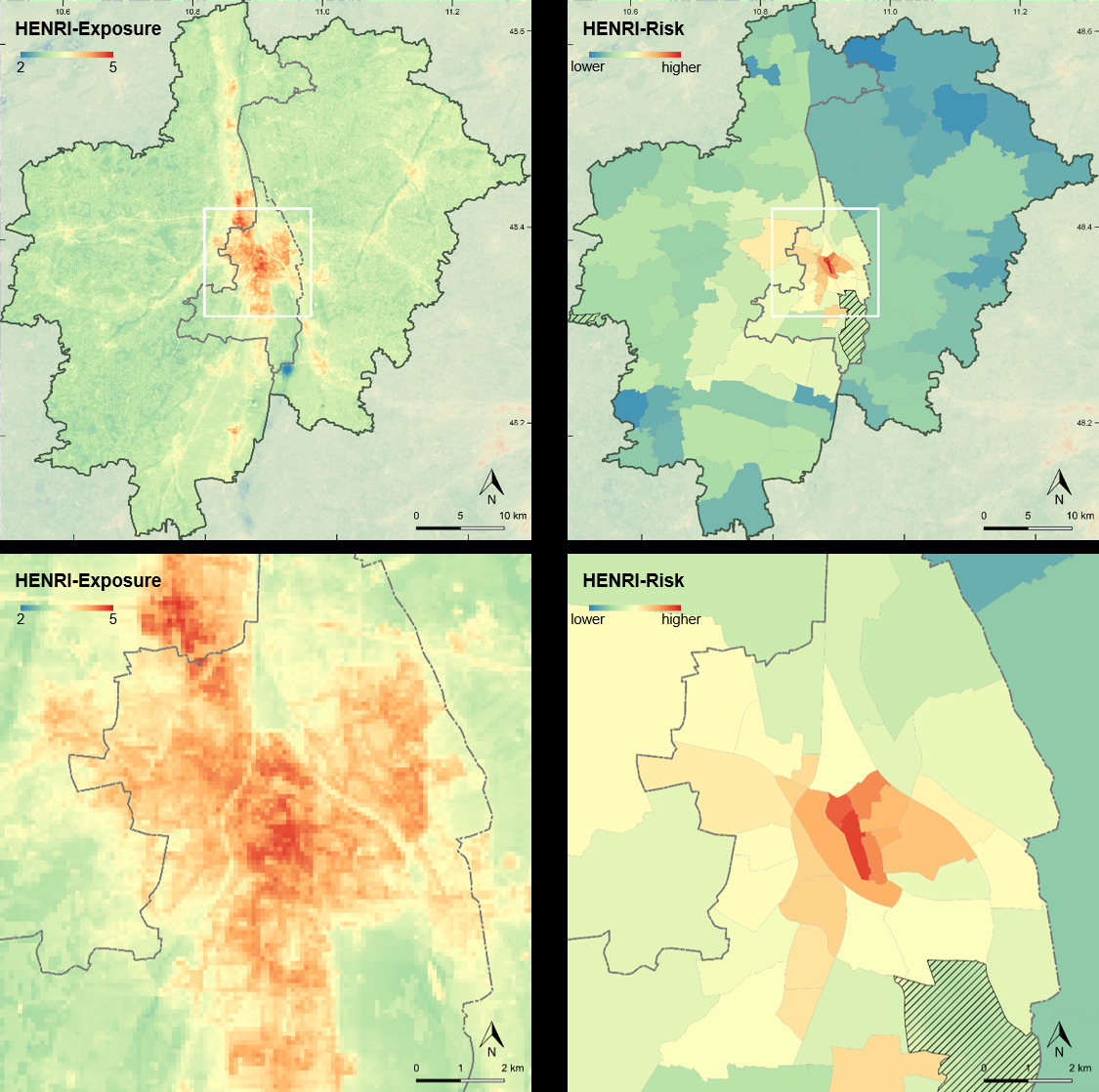
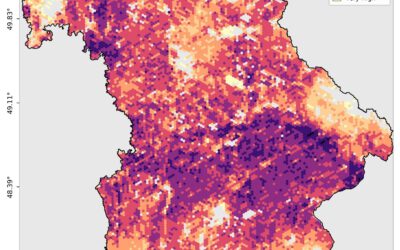
from the abstract: “Non-communicable diseases – NCDs – (asthma, cancer, or diabetes, for example) are a major concern for modern medicine. According to the World Health Organization, NCDs are responsible for over 70% of global premature deaths. Apart from the mortality directly related to these chronic diseases, they constantly strain the individual’s immune system, increasing susceptibility to transmittable diseases. Thus, mitigating the effects of NCDs is one of the most pressing issues of modern medicine, healthcare, and governments in general. NCD-susceptibility is dependent on the Genome and the Exposome. The latter of which is principally made up of environmental parameters such as pollution and radiation. Exposure to environmental stressors such as bad air or water quality, noise, extreme heat, or an overall unnatural surrounding all impact the susceptibility to NCDs. The contribution of Earth Observation (EO) products to NCD-research is on the rise. This is especially true for remote sensing-derived geoinformation products on land surface dynamics. But while numerous reviewed works have provenly associated environmental parameters with significant health impacts, exposome maps and products that communicate NCD-risk are still not widely available. This thesis introduces a novel methodological framework for EO-based, area-wide exposure and NCD-risk analyses based on insights gathered from review results. Using freely available datasets, exemplary calculations are performed for exposure intensity analyses on three varying levels of complexity: ranging from one index including six environmental parameters, such as the NDVI and basic air pollution parameters to more complex indices that include up to twelve environmental parameters and account for specific stressors such as traffic-induced noise pollution. Further, NCD-risk is assessed by accounting for demographic and socioeconomic susceptibility to environmental stressors. In the frame of this thesis, the city region of Augsburg in Southern Germany was chosen as study area. However, all used datasets are available at least nationwide.” Supervised by Claudia Kuenzer and Felix Bachofer.