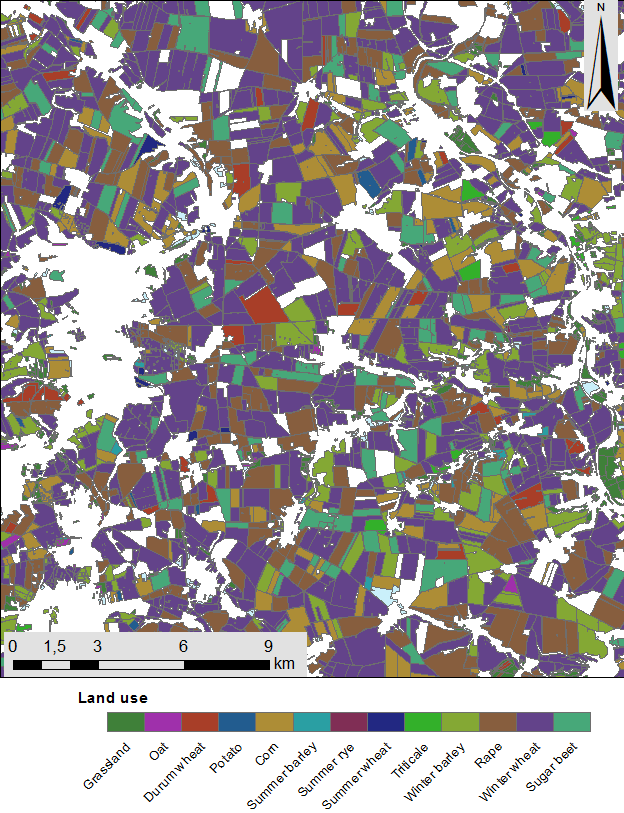
 Remote sensing based crop mapping is still challenging when just relying on optical information as the only data source. Due to the unavailability of adequate optical satellite images the integration of SAR is promising and can be explored within an innovation laboratory. The combination of SAR (TERRA-SAR-X and Sentinel-1) and optical images (RapidEye and Sentinel-2) for classification will improve the reliability and accuracy of crop maps. In addition, a sequential masking classification technique will be used to classify individual crop classes. These results will be compared with results of a one-step classification, in which all crop classes were classified at the same time. It has to be determined if the sequential masking approach will improve overall classification accuracies, compared to the one-step classification. As a study site the TERENO test site DEMMIN in Mecklenburg-Western Pomerania is suggested.
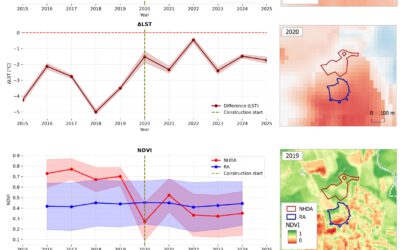
EAGLE MSc Defense: New Housing Development Areas: Assessing Structural Types and Environmental Effect
On September 22, 2026, Agnes Zwick will present her Master Thesis on " New Housing Development Areas: Assessing Structural Types and Environmental Effect" at 10:00 at the seminar room 3 in John-Skilton-Str. 4a. From the abstract: Germany faces a persistent tension...
![[spotlight] Lecturer Spotlight: Martin Wegmann](https://eagle-science.org/wp-content/uploads/2026/07/Martin_Wegmann_EAGLE_lecture_2026-400x250.jpg)