
Lecturer
Julia Rieder
ECTS
5 ECTS
Aim
The course provides a practical introduction to LiDAR technology and point cloud analysis. Students gain hands-on experience with LiDAR data, from acquisition principles to processing and interpretation, and learn how LiDAR supports applications such as terrain modelling, forestry, and others. The course emphasizes critical understanding of data quality, limitations, and real-world use cases
Content
This course provides an overview of the scientific field surrounding LiDAR as a key technology for three-dimensional Earth observation. The course covers the fundamentals of LiDAR remote sensing, point cloud data structures, and processing methodologies across platforms ranging from spaceborne and airborne systems to terrestrial and mobile laser scanning. Furthermore, the course highlights current developments and emerging analytical possibilities enabled by advanced point cloud analysis and discusses future potential as LiDAR technologies and methodologies continue to evolve and converge with related disciplines.
Coding
Software
Techniques
Content
General Course News and Updates
M.Sc. defense of Sarah Nolting
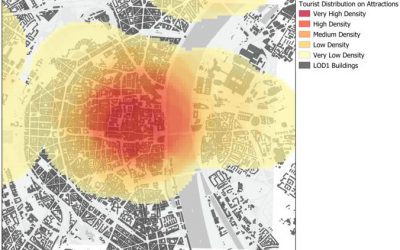
Sarah Nolting will defend her M.Sc. thesis "Risk Assessment for Flood Events based on Geo- and Socioeconomic Data – A Case Study for North-Rhine Westphalia, Germany" on Wednesday 27th 2pm in room 0.004 OKW 86. from her abstract: "The world’s population has doubled...
M.Sc. defense by Johannes Löw
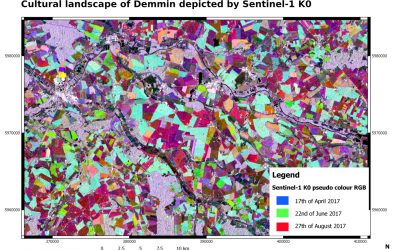
You are all invited to join the M.Sc. presentation by Johannes Löw. He will defend his M.Sc. thesis on Wednesday 20th of March at 2pm in room 0.004 in OKW 86. from his abstract:Since Sentinel-1 A and B have become fully operational, it is now possible to generate...
Pilar Endara Pinillos handed in her M.Sc. thesis
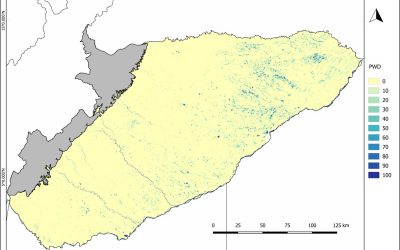
Pilar Endara Pinillos handed in her M.Sc. thesis "Flooding patterns and vegetation developments in the Orinoco flooded savannas of Colombia." Her M.Sc. defense will be on Wednesday 13th at 2pm in room 0.004 (OKW 86). The ecosystems that are present within Colombian...

Marcus Groll successfully defended his M.Sc. thesis
we congratulate Marcus Groll for his successful defense of this M.Sc. presentation “Deep learning for Instance Segmentation of bomb craters on historical aerial images of the Second World War ”. He has only a few days off before starting his new job as image data...

internship and innovation lab presentations
The following students will present next Tuesday (26th) at 2pm in room 0.004 their internships or innovation labs:Itohan-osa Abu (internship): Mangrove Mapping with TimeScan Data for Nigeria and an Analysis in Context of Coastal Gas Flaring Salim Soltani (internship):...
M.Sc. thesis handed in by Marcus Groll
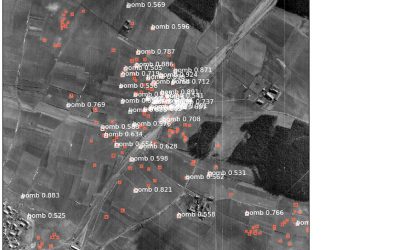
Marcus Groll handed in his M.Sc. thesis "Deep learning for Instance Segmentation of bomb craters on historical aerial images of the Second World War " and will defend it next week. Abstract: During the Second World War (WWII) many air strikes were flown on German...

M.Sc. defense of Maninder Singh Dhillon
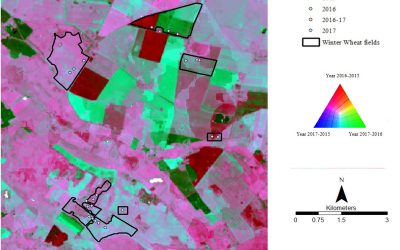
We congratulate Maninder who successfully defended his M.Sc. thesis “Comparing the performance of crop growth models using synthetic remote sensing data at DEMMIN, Germany” supervised by Martin Wegmann and Christopher Conrad.
Maninder Singh Dhillon handed in his MSc
Maninder Singh Dhillon handed in his M.Sc. "Comparing the performance of crop growth models using synthetic remote sensing data at DEMMIN, Germany" supervised by Thorsten Dahms with the first and second supervisors Martin Wegmann and Christopher Conrad, respectively....

EAGLE visit DLR-EOC
Our EAGLEs in 2018 visited the German Aerospace Center, namely the Earth Observation Center, close to Munich. Various topics were presented by DLR scientist and the EAGLEs hat the chance to discuss various topics in small groups with individual scientists.
Internship and M.Sc. idea presentations
on Thursday, December 13th, at 12:30 we will have the following presentations in the student working room (Josef Martin Weg 52, 3rd floor): internship presentations: Johni Miah"Remote Sensing and Geographic Information System for Decision...