
Aim
Designing scientific graphics that provide all necessary information without being too packed, focusing on the essential message and being able to actually create such graphics will be covered In this class. All necessary tools and and approaches to create adequate figures and maps will be covered.
Content
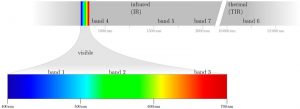
figure from the book “Remote Sensing and GIS for Ecologists” by Wegmann, Leutner and Dech, created with tikz
General guidelines of scientific graphics and maps will be covered based on e.g. Tufte and followed by practical implementation of graphic ideas, as well as critical evaluation of the results. Only open source program will be used such as R or tikz/pgf and students will have the opportunity to work specifically on certain scientific graphics or maps using e.g. ggplot2 and explore the potential and limits of good scientific graphs. Good map designs will be discussed as well and common mistakes will be pointed out. After this course you will be capable to create your own graphics for a specific scientific purpose e.g. your M.Sc. thesis.
Coding
Software
Techniques
Content
General Course News and Updates
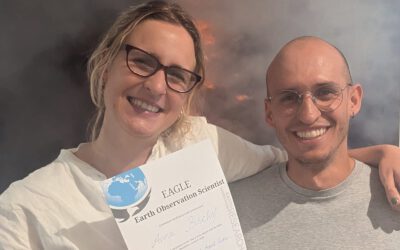
Successful MSc Defense by Anna Bischof
We congratulate Anna Bischof on the successful defense of her MSc thesis, "Feasibility of Unoccupied Aerial System-Based Active Fire Monitoring in African Savannas." Anna's research addressed one of the key challenges in fire ecology and remote sensing: understanding...
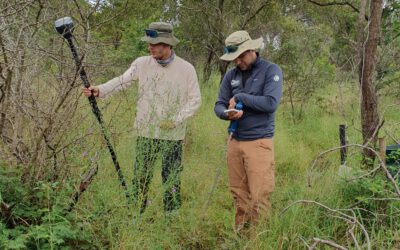
EAGLE Internship Presentation: Fire and drought research in savanna ecosystems – Kruger National Park
On June 16, 2026, Sebastian Rothaug and Clemens Schömig will present their internship results on " Fire and drought research in savanna ecosystems – Kruger National Park" at 12:00 PM in seminar room 3, John-Skilton-Str. 4a. From the abstract: Climate change is...
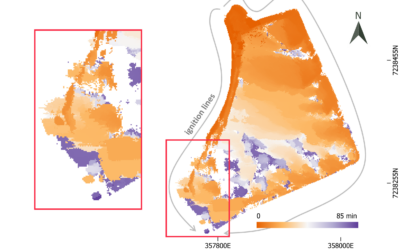
EAGLE MSc Defense: Feasibility of Unoccupied Aerial System-Based Active Fire Monitoring in African Savannas
On June 09, 2026, Anna Bischof will present her Master Thesis on " Feasibility of Unoccupied Aerial System-Based Active Fire Monitoring in African Savannas" at 12:00 in seminar room 3, John-Skilton-Str. 4a. From the abstract: Fire is a fundamental Earth system process...
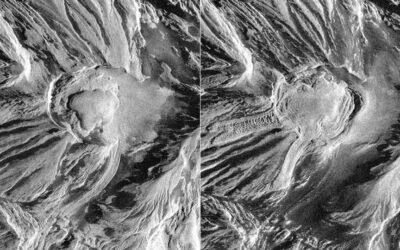
EAGLE Innolab Presentation: Temporal Analysis of Lava Dome Morphology and Crevasse Development at Great Sitkin Volcano
On June 02, 2026, Daniel Voellner will present his Innolab results on " Temporal Analysis of Lava Dome Morphology and Crevasse Development at Great Sitkin Volcano" at 12:00 in seminar room 3, John-Skilton-Str. 4a. title of presentation: From the abstract: Volcanic...
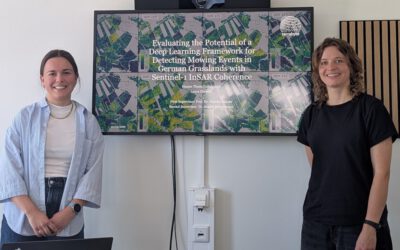
Successful MSc Defense by Laura Obrecht
At the recent EAGLE MSc defenses, Laura Obrecht presented her thesis on the detection of grassland mowing events using Sentinel-1 InSAR coherence and deep learning approaches. Her work, titled “Detektion von Grünlandmahd mit Sentinel-1 InSAR Coherence und einem Deep...
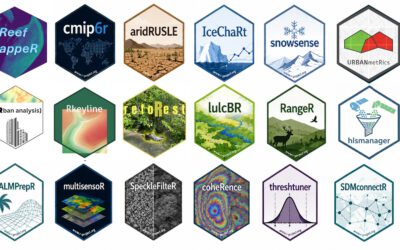
First-semester EAGLE students deliver an impressive suite of R packages
One of the most encouraging signs of a strong Earth Observation curriculum is when students move beyond learning existing tools and start building their own. In their very first semester of the EAGLE MSc program, our students did exactly that: developing a diverse and...
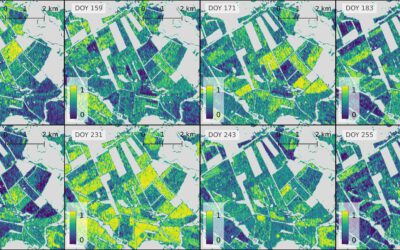
EAGLE MSc Defense: Evaluating the Potential of a Deep Learning Framework for Detecting Mowing Events in German Grasslands with Sentinel-1 InSAR Coherence
On May 22, 2026, Laura Obrecht will present her Master Thesis on " Evaluating the Potential of a Deep Learning Framework for Detecting Mowing Events in German Grasslands with Sentinel-1 InSAR Coherence" at 11:00 a.m. in room 01.B.03 (EORC meeting room 1st floor). From...
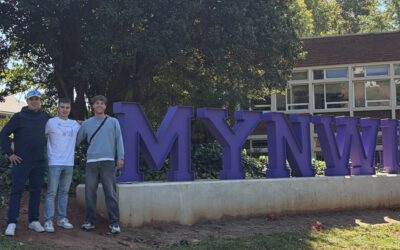
From Kruger to Potchefstroom: Reconnecting with South African EAGLE
After completing their internship in Kruger National Park, EAGLE students Sebastian and Clemens were not quite ready to leave South Africa behind. Instead of heading straight home, they reunited with their South African EAGLE friend, Charl Strydom, for a road trip...
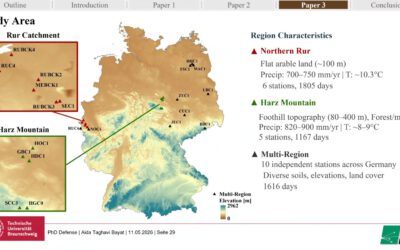
Celebrating Dr. Aida Taghavi: An EAGLE Graduate’s Successful PhD Defense
We are delighted to congratulate our former EAGLE M.Sc. student, Dr. Aida Taghavi, on the successful defense of her PhD thesis, “Multi-Sensor Soil-Moisture Estimation and Freeze–Thaw Detection across Alpine Grasslands of the Tibetan Plateau, Peatland Permafrost in...
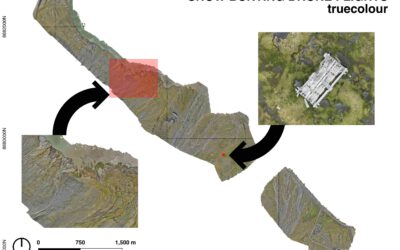
EAGLE Internship Presentation: Remote sensing for Ecological Applications in the High Arctic
On April 13, 2026, Clara Vydra will present her internship results on " Remote sensing for Ecological Applications in the High Arctic" at 15:30 in seminar room 3, John-Skilton-Str. 4a. From the abstract: This internship focused on supporting Master students in their...