
Aim
In this lecture you will gain a broad overview of the applications of remote sensing. Examples from different disciplines and applied Earth Observation projects will provide your with a comprehensive understanding of if, where and how remote sensing can contribute to qualitative and quantitative assessments of the cryosphere, forest ecosystems, agro-ecosystems, the coastal zone and urban ecosystems; amongst others. We will evaluate the potential of passive and active sensor systems and adress the advantages and shortcomings of existing sensors in the optical / mutlsispectral, thermal and microwave domain.
Content
This lecture provides knowledge on applications of Earth Observation with a focus on remote sensing of the land surface. Which research questions of different disciplines can be answered by the means of Earth Observation? What are the main approaches? The module links up remote sensing measurements to geo- and biophysical parameters required for further geoanalysis. Commonly used methodological approaches for the derivation of the different parameters are presented. Examples include amongst others applications in geography, environmental planning, ecology, biology, oceanology, soil science, geology, atmospheric science, but also e.g. pollution control (monitoring) and natural resource management. In addition, the module outlines selected examples, how remote sensing technology can be transferred to the workplace of professionals also beyond science, e.g. via the use of geoinformation systems.
General Course News and Updates
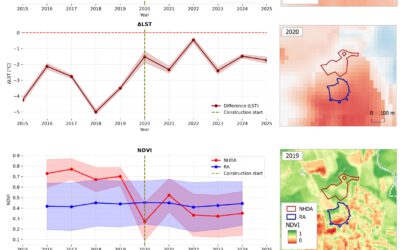
EAGLE MSc Defense: New Housing Development Areas: Assessing Structural Types and Environmental Effect
On September 22, 2026, Agnes Zwick will present her Master Thesis on " New Housing Development Areas: Assessing Structural Types and Environmental Effect" at 10:00 at the seminar room 3 in John-Skilton-Str. 4a. From the abstract: Germany faces a persistent tension...
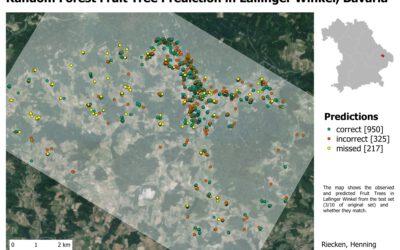
EAGLE Internship Presentation: Internship at the German Remote Sensing Data Center (DFD) of the German Aerospace Center (DLR)
On September 22, 2026, Henning Riecken will present his internship results on " Internship at the German Remote Sensing Data Center (DFD) of the German Aerospace Center (DLR)" at 12:00 at the seminar room 3 in John-Skilton-Str. 4a. From the abstract: Through the...
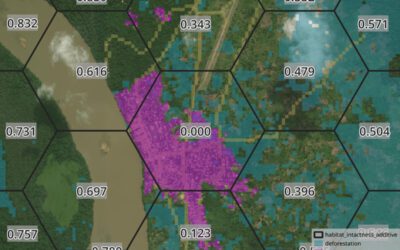
EAGLE Internship Presentation: Verifiable Nature Units
On August 25, 2026, Lutz Kleemann will present his internship results on " Verifiable Nature Units" at 12:00 at the seminar room 3 in John-Skilton-Str. 4a. From the abstract: Biodiversity credits and conservation work increasingly depend on measurable outcomes. During...
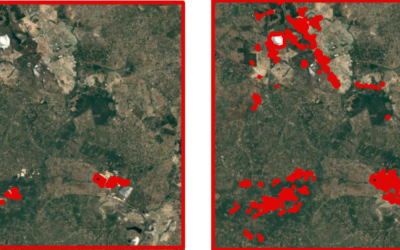
EAGLE Innolab Presentation: Post-processing and Quality Assessment of Mapathon-Derived Mining Data for Cobalt Belt Mapping
On August 11, 2026, Espérance Kandjale will present her Innolab results on " Post-processing and Quality Assessment of Mapathon-Derived Mining Data for Cobalt Belt Mapping " at 12:00 in seminar room 3, John-Skilton-Str. 4a. From the abstract: During my internship, I...
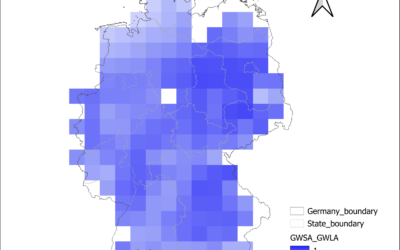
EAGLE Internship Presentation: Groundwater Level Trends in Germany: A National-Scale Assessment Using In-Situ Monitoring Data and GRACE Satellite Products
On August 04, 2026 Anugraha Das will present her internship results on " Groundwater Level Trends in Germany: A National-Scale Assessment Using In-Situ Monitoring Data and GRACE Satellite Products" at 12:00 at the seminar room 3 in John-Skilton-Str. 4a. From the...
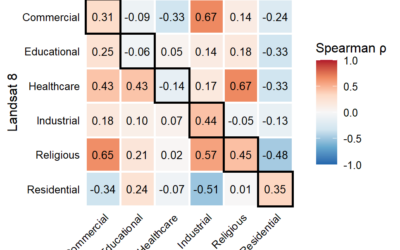
EAGLE Innolab Presentation: Comparing intra-urban thermal patterns using high-resolution HotSat-1 and Landsat 8 data from 14 U.S. cities
On July 24, 2026, Wajiha Yasmeen will present her inno lab results on " Comparing intra-urban thermal patterns using high-resolution HotSat-1 and Landsat 8 data from 14 U.S. cities " at 12:00 at the EORC meeting room/1st floor in John-Skilton-Str. 4a From the...
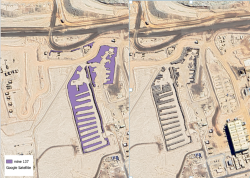
EAGLE Internship Presentation: Detection of OffRoad Tyre Dumpsites at Mining Operations Using Sentinel-2 Imagery and Deep Learning Segmentation
On July 21, 2026, Wajiha Yasmeen will present her internship results on " Detection of Off-The-Road Tyre Dumpsites at Mining Operations Using Sentinel-2 Imagery and Deep Learning Segmentation " at 12:00 at the seminar room 3 in John-Skilton-Str. 4a. From the abstract:...
![[spotlight] Lecturer Spotlight: Martin Wegmann](https://eagle-science.org/wp-content/uploads/2026/07/Martin_Wegmann_EAGLE_lecture_2026-400x250.jpg)
[spotlight] Lecturer Spotlight: Martin Wegmann
If you've ever sat in a Würzburg classroom learning how to wrangle satellite data, there's a good chance Martin Wegmann was the one standing at the front. He's been the driving force behind the EAGLE MSc program, the Applied Earth Observation degree at the University...
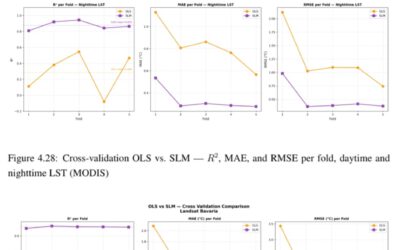
EAGLE MSc Defense: Evaluating Surface Urban Heat Islands in Bavarian Cities through a Multi-Variable Analysis
On July 07, 2026, Farimah Abdolzadeh will present her Master Thesis on " Evaluating Surface Urban Heat Islands in Bavarian Cities through a Multi-Variable Analysis " at 13:00 at the seminar room 3 in John-Skilton-Str. 4a. From the abstract: Surface Urban Heat Island...
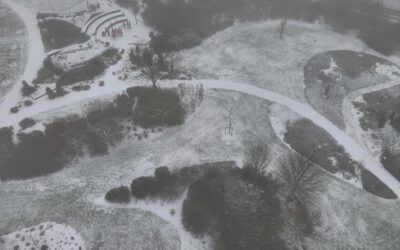
EAGLE Internship Presentation: ” Global Water Detection and Thermal UAV Data Analysis”
On July 14, 2026, Elena Scholz will present her internship results on " Global Water Detection and Thermal UAV Data Analysis" at 12:00 in seminar room 3, John-Skilton-Str. 4a. From the abstract: Internship 1 - DLR-DFD “Watersecurity and Coastal Systems” The majority...