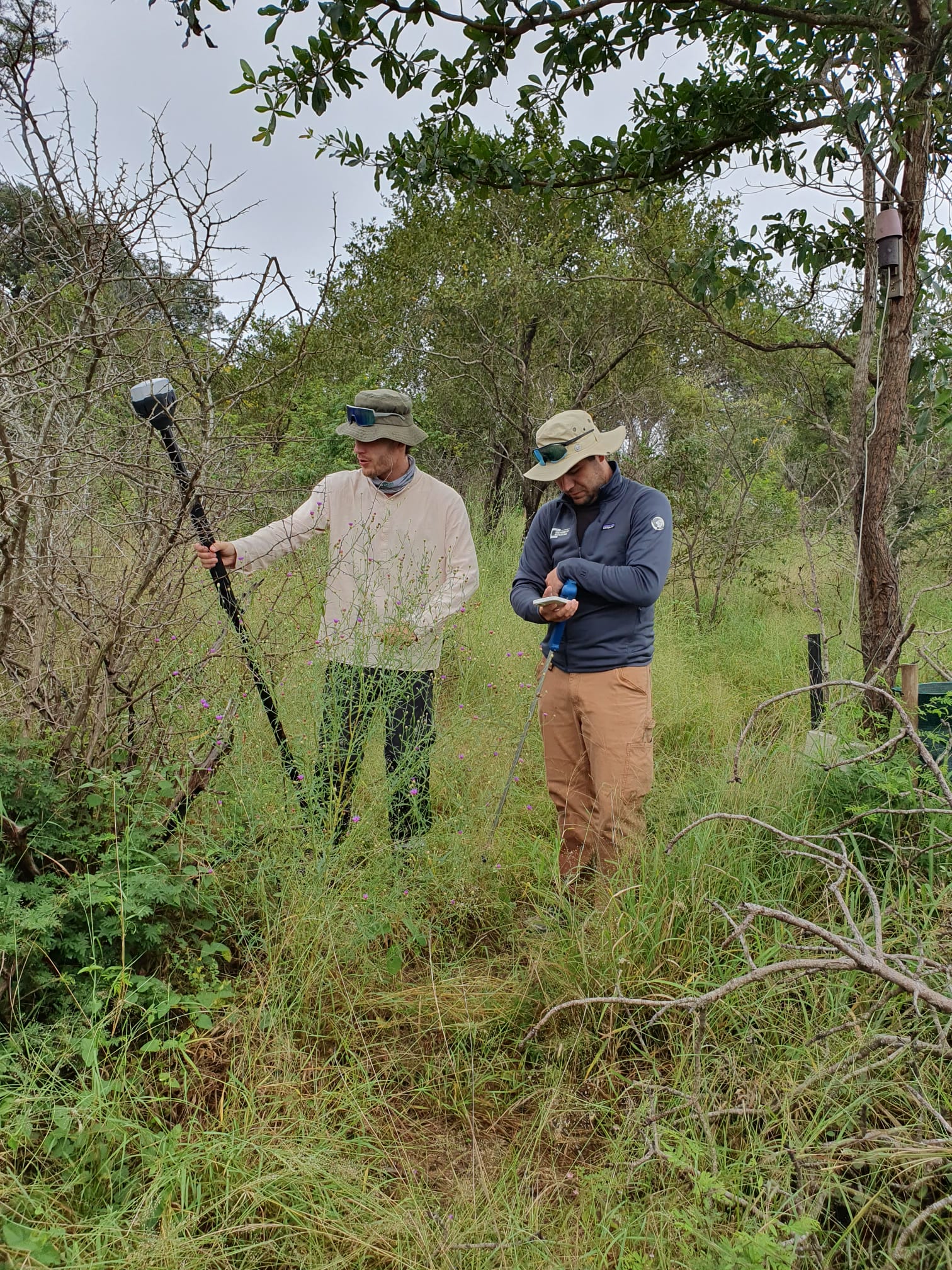
On June 16, 2026, Sebastian Rothaug and Clemens Schömig will present their internship results on ” Fire and drought research in savanna ecosystems – Kruger National Park” at 12:00 PM in seminar room 3, John-Skilton-Str. 4a.
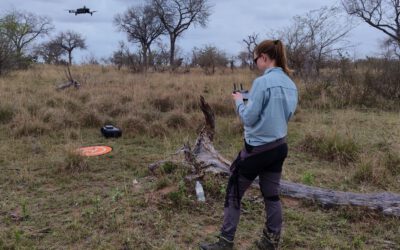
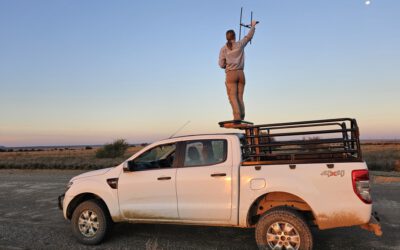
From the abstract: Climate change is increasingly stressing savanna vegetation through rising temperatures, prolonged drought periods, and changing fire regimes. These pressures affect tree mortality, vegetation structure, water availability, and ecosystem resilience across savanna landscapes. Understanding how savanna ecosystems respond to drought and fire is therefore essential for improving conservation strategies and monitoring long-term environmental change. Remote sensing provides an important tool for monitoring environmental changes in savanna ecosystems across large spatial and temporal scales. UAS-based multispectral, thermal, and LiDAR measurements enable new possibilities for the assessment of vegetation condition. Combined with field-based observations and ground-truth measurements, these data contribute to a better understanding of ecosystem dynamics and support long-term ecological research and conservation efforts. Sebastian and Clemens are going to present their internship work and projects carried out over two months in Kruger National Park. They joined a field campaign conducted in collaboration with SANParks, including UAS-based data acquisition and ground-truth measurements of the vegetation.
1st supervisor: Dr. Mirjana Bevanda
2nd (external) supervisors: Dr. Coetsee and Dr. Wigley (SANParks)
Host: SANParks
From the abstract: Climate change is increasingly stressing savanna vegetation through rising temperatures, prolonged drought periods, and changing fire regimes. These pressures affect tree mortality, vegetation structure, water availability, and ecosystem resilience across savanna landscapes. Understanding how savanna ecosystems respond to drought and fire is therefore essential for improving conservation strategies and monitoring long-term environmental change. Remote sensing provides an important tool for monitoring environmental changes in savanna ecosystems across large spatial and temporal scales. UAS-based multispectral, thermal, and LiDAR measurements enable new possibilities for the assessment of vegetation condition. Combined with field-based observations and ground-truth measurements, these data contribute to a better understanding of ecosystem dynamics and support long-term ecological research and conservation efforts. Sebastian and Clemens are going to present their internship work and projects carried out over two months in Kruger National Park. They joined a field campaign conducted in collaboration with SANParks, including UAS-based data acquisition and ground-truth measurements of the vegetation.
1st supervisor: Dr. Mirjana Bevanda
2nd (external) supervisors: Dr. Coetsee and Dr. Wigley (SANParks)
Host: SANParks
![[Spotlight] Lecturer Spotlight: Julian Faeth](https://eagle-science.org/wp-content/uploads/2026/10/Julian_Faeth_EORC_EAGLE_2026-400x250.jpg)