On April 28, 2026, Hanna Zoë Schulten will present her internship results on ” Geomorphological Monitoring at Askja Caldera: Field Observations of Subsurface Instability” at 12:30 in seminar room 3, John-Skilton-Str. 4a.
From the abstract: Volcanic calderas are dynamic and hazard-prone environments, where ongoing morphological changes such as fracturing, subsidence, and mass wasting pose significant risks. A prominent example is the Askja caldera in northern Iceland, an active volcanic system that last erupted in 1961 but continues to exhibit significant geomorphological change through various surface expressions of subsurface instability.
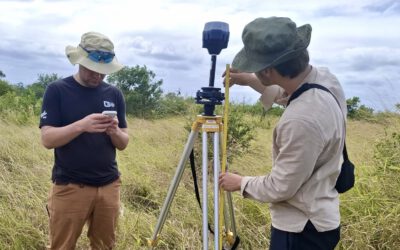
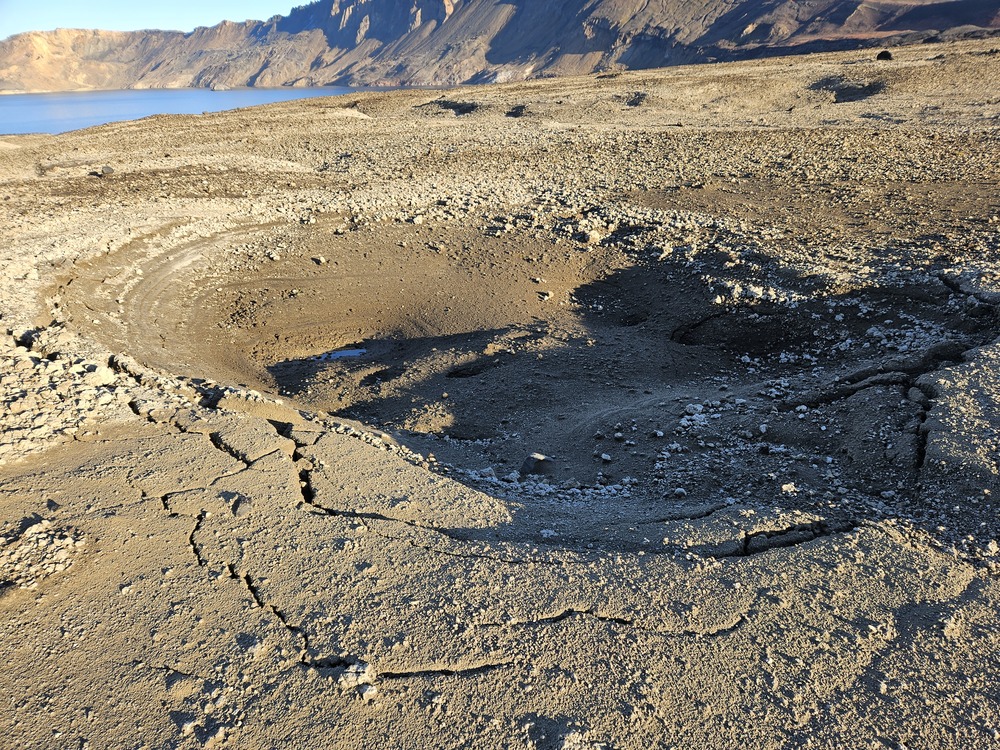
As part of a field campaign to Askja in August 2025 with the GFZ Helmholtz Centre Potsdam (Section 2.1 – Physics of Earthquakes and Volcanoes), a range of data collection methods was applied, including UAV-based surveys (multispectral and thermal), gas measurements in active geothermal areas, field spectrometry, and the sampling of water and rock material. Field observations highlighted a high degree of ground instability, particularly along the western caldera margin, where dense distributions of fractures and sinkholes made fieldwork challenging. Previous studies have identified hundreds of such features within the caldera, underlining the significance of these processes for slope stability and hazard assessment.
The internship presentation provides an overview of the field methods used, their practical implementation in a remote volcanic environment, and their role in monitoring surface and subsurface processes. In addition to scientific insights, the presentation also reflects on challenges encountered during fieldwork and research collaboration.
1st supervisor: Dr. Maninder Singh Dhillon Host: GFZ Helmholtz Centre Potsdam (Section 2.1 – Physics of Earthquakes and Volcanoes)
From the abstract: Volcanic calderas are dynamic and hazard-prone environments, where ongoing morphological changes such as fracturing, subsidence, and mass wasting pose significant risks. A prominent example is the Askja caldera in northern Iceland, an active volcanic system that last erupted in 1961 but continues to exhibit significant geomorphological change through various surface expressions of subsurface instability.
As part of a field campaign to Askja in August 2025 with the GFZ Helmholtz Centre Potsdam (Section 2.1 – Physics of Earthquakes and Volcanoes), a range of data collection methods was applied, including UAV-based surveys (multispectral and thermal), gas measurements in active geothermal areas, field spectrometry, and the sampling of water and rock material. Field observations highlighted a high degree of ground instability, particularly along the western caldera margin, where dense distributions of fractures and sinkholes made fieldwork challenging. Previous studies have identified hundreds of such features within the caldera, underlining the significance of these processes for slope stability and hazard assessment.
The internship presentation provides an overview of the field methods used, their practical implementation in a remote volcanic environment, and their role in monitoring surface and subsurface processes. In addition to scientific insights, the presentation also reflects on challenges encountered during fieldwork and research collaboration.
1st supervisor: Dr. Maninder Singh Dhillon Host: GFZ Helmholtz Centre Potsdam (Section 2.1 – Physics of Earthquakes and Volcanoes)